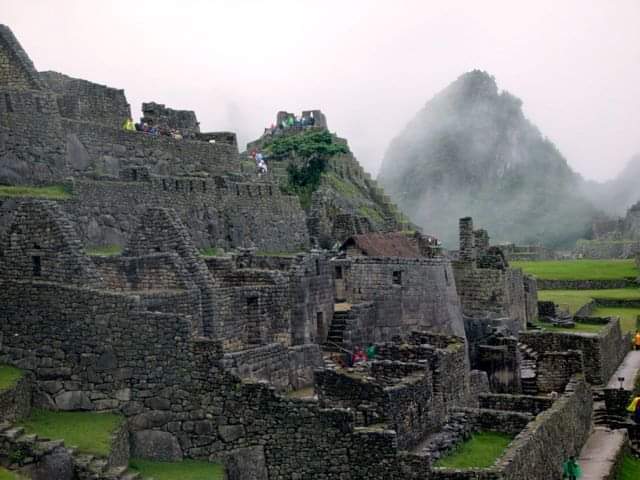
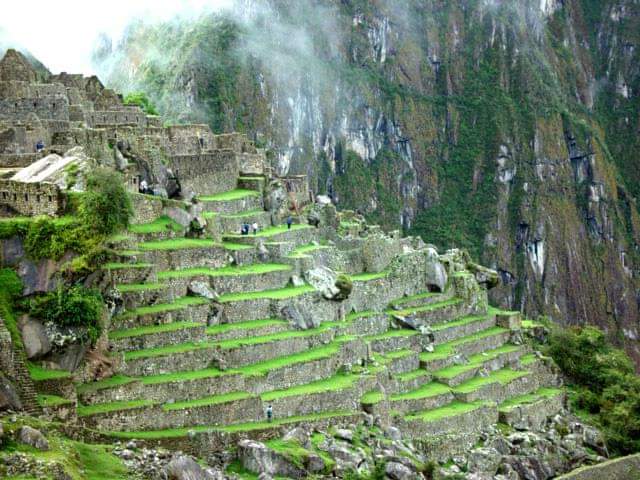
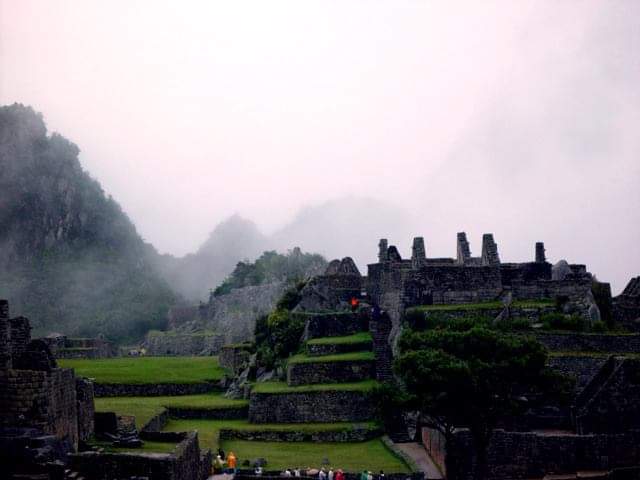
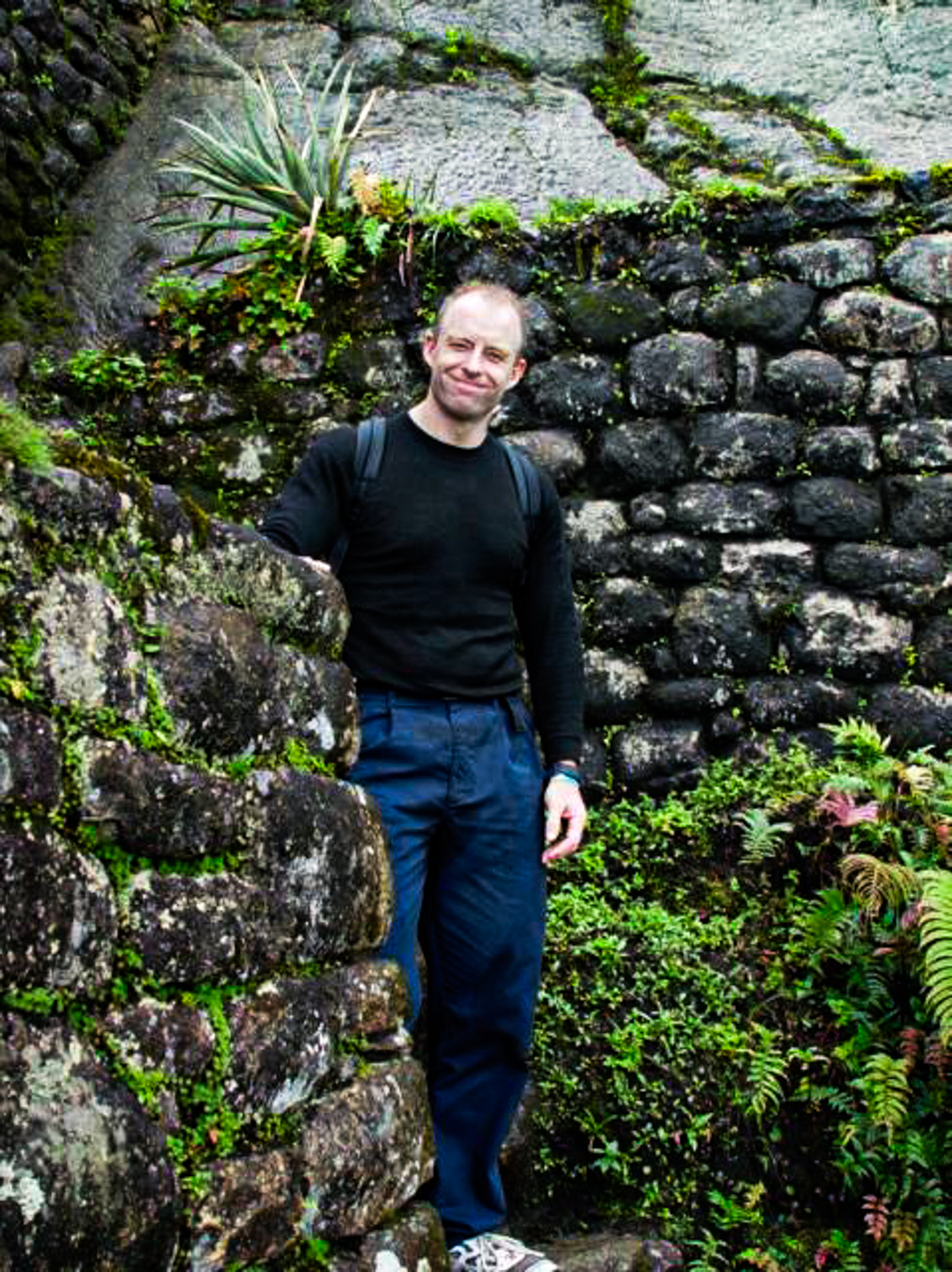
In 2007, I had the chance to join a mission trip to Peru with a group comprising teachers and students from Cook Inlet Academy in Alaska. Several individuals from a nearby church also accompanied us as we set out for the mission field. After finishing our work with the local communities, we spent a few days exploring various sites in Peru. The photographs depict the stunning Machu Picchu, a 15th-century Inca citadel situated in the Eastern Cordillera of southern Peru, perched on a mountain ridge at 7,970 feet. The mountain shrouded in fog in the upper photo is known as Wayna Picchu.
The choices we make lead up to actual experiences. It is one thing to decide to climb a mountain. It is quite another to be on top of it.” -Herbert A. Simon
Along with many of my teammates, I ascended Wayna Picchu. At that time, being 41 and in relatively good shape, I was already showing early signs of arthritis, so I wore a brace on my right knee for strenuous activities. In certain sections of the trail, I had to proceed very slowly. I considered turning back, not having anticipated the hike’s difficulty. Additionally, I was concerned about holding the others back. Fortunately, a fellow teacher noticed I needed encouragement. He adjusted his pace to match mine, accommodating my need for frequent rest stops during our hike. He likely could have ascended and descended the mountain twice in the time it took me to complete it once. I’m speaking of Kenny Leaf. His kindness extends to all, but in this instance, I was the fortunate beneficiary. It was a moment that has left an indelible mark on my life. (I’ve never expressed this to him; hopefully, he will come across this one day.)
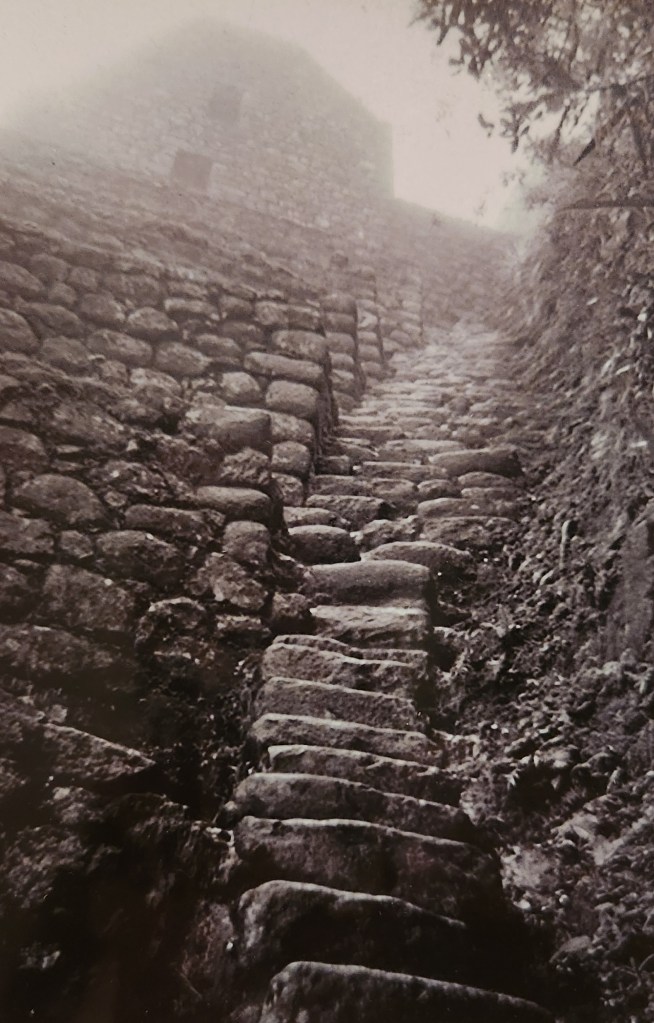
The younger members of our group, as I recall, advanced ahead, sprinting along the trail. They navigated the narrow paths and ancient, steep steps, ascending and descending. The trail itself was neither a steady decline nor incline but rather a series of narrow and steep segments. My most vivid memory is that the trail undulated continuously. I pressed on, though the thought of giving up seemed increasingly appealing. Yet, we had ventured too deep into the hike to consider turning back. The path was too narrow to allow even a single person to retreat on such a bustling trail. There was an ascending trail and a separate descending one. Walking down the ascending trail would have been akin to moving the wrong way on an escalator. As I contemplated turning back, Kenny suggested, “Imagine yourself running as you descend, and as you start climbing the next section, picture yourself flying.” At that moment, I looked at him and laughed. He joined in the laughter but urged me to give the method a try. Honestly, I think he was attempting to distract me from the trail’s more challenging sections. And it worked. I managed to divert my attention from the challenging circumstances and just took one step after another. Eventually, I reached the summit with the entire group. Due to the large number of hikers that day, we didn’t linger at the peak. Shortly after arriving, we embarked on the equally demanding descent.
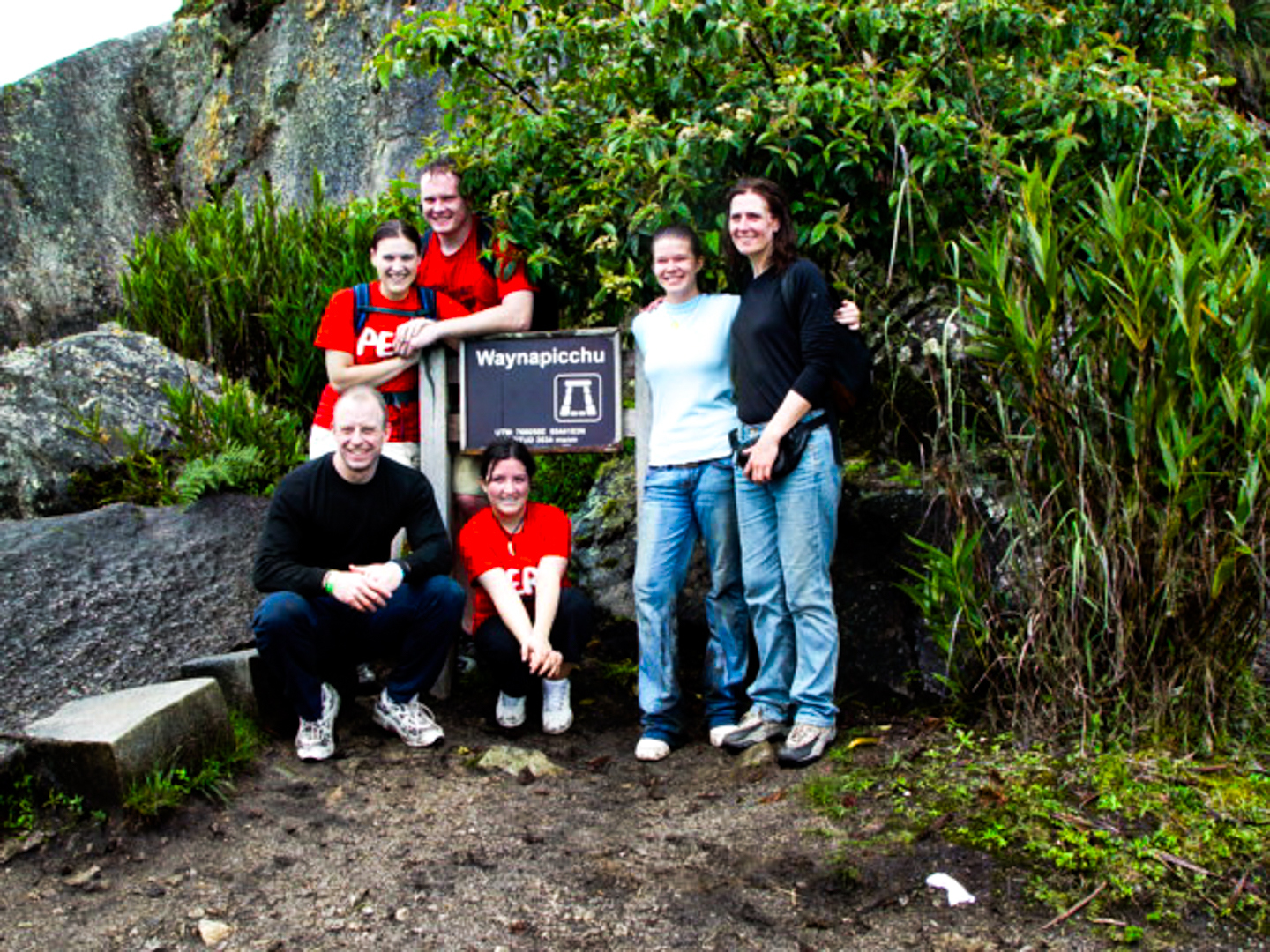
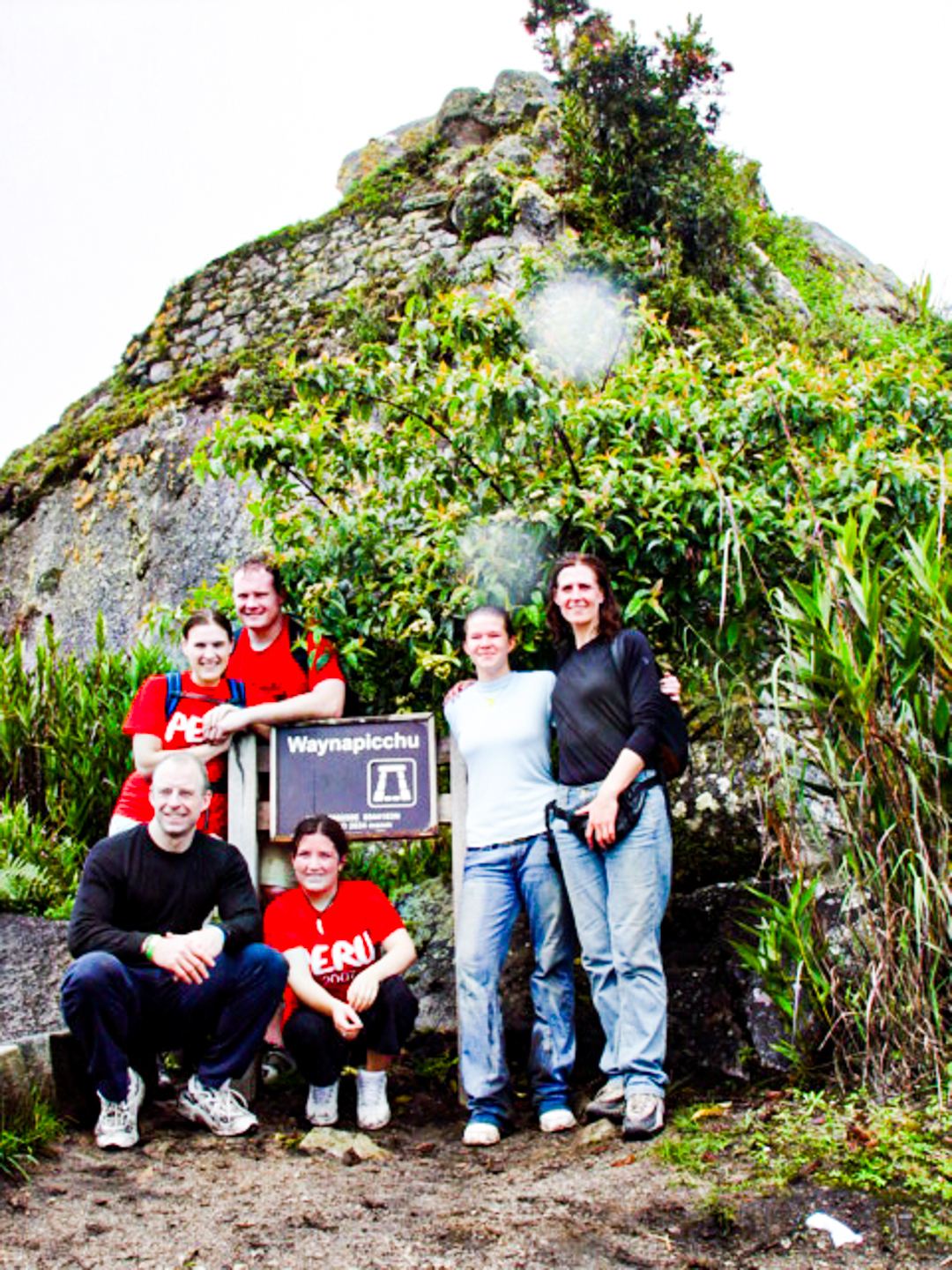
Occasionally, the word “mountain” is a significant challenge that seems insurmountable. There are times when a problem is so vast that it starts to consume aspects of your thoughts, feelings, and even has an impact on your physical well-being. Nearly everyone can identify with this idea, regardless of the situation. Climbing Wayna Picchu was a genuine challenge; I contemplated eliminating the struggle of the ascent. I could have chosen to opt out and miss this “once-in-a-lifetime” chance. Instead, I decided to persevere through the challenge with assistance, and I’m relieved I didn’t give up. The obstacles we overcome often become valuable lessons and strengthen us.

Throughout our lives, we face various mountains that we must climb, traverse, or hope to disappear. My life has been such a journey. The term “horrific” is not one I use lightly, but it aptly describes my childhood.
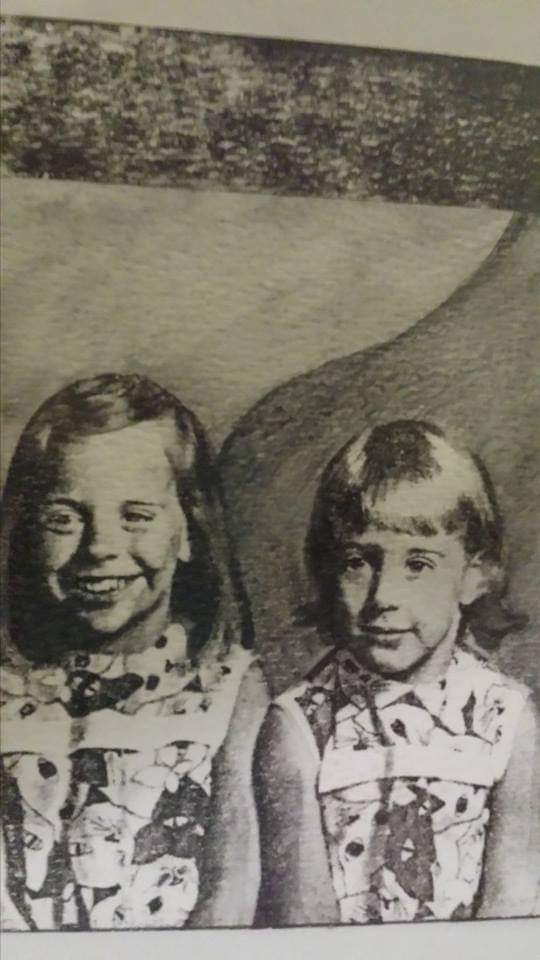


In this photo are my sister and myself. I’m not certain of our exact ages, but I would estimate that my sister was between 4 and 6 years old, and I was the younger one, likely between 2 and 4 years old. (The first image is a graphite print that I made.) The other two photographs that capture my smile were ones I had not seen until about a decade ago. There are few pictures or memories from my childhood that show me smiling. These images present an illusion of a joyful childhood.
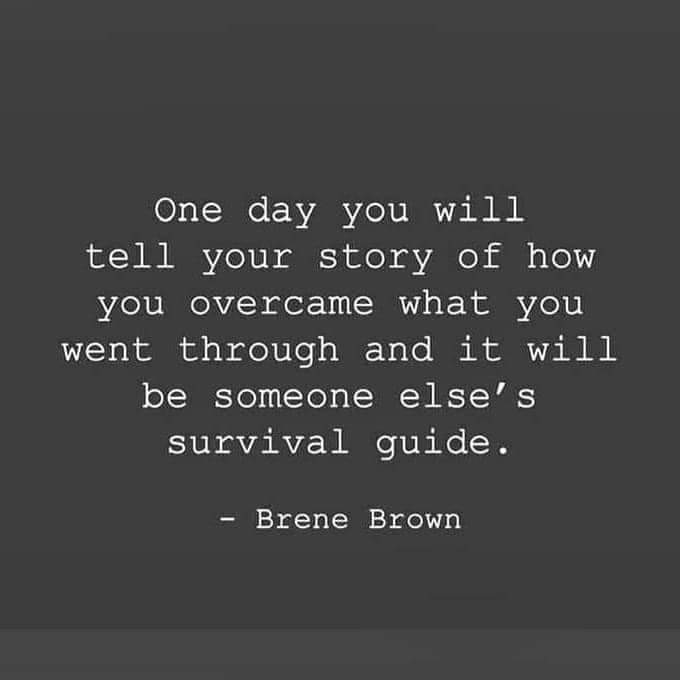
So, to be clear, I was sexually abused as a child. I will not, in this post, speak of all the details; but some are necessary for understanding. I also want to share my experience of healing, even if you (like me) have been in some of the darkest places and lived through some of the most horrible situations. It is time for me to share my story in more of a public forum to help others.

I was sexually abused from age five to eighteen by my father. My mother was aware of the abuse. In [somewhat of] her defense, she was also trying to survive and was dealing with her own relationship issues with my dad. My mother was at a loss on how to aid herself, much less me. It’s not that I condone her actions. The idea that a mother could fail to shield her little girl is beyond my comprehension, just as the notion of a father harming his daughter is unfathomable.

For years, I struggled to comprehend. Why did this occur? How could it have happened? Why didn’t a family member, a teacher, or someone from the church intervene? Why did God let this happen? Why was I born into this specific family? What did I do, or fail to do, to have this life? The questions were numerous and persistent. These questions became my “mountains”. Mountains that I sought not only to remove but also to dissect for a complete understanding. Many of those questions remain unanswered, and some have been addressed, but only superficially.
These questions started to dominate and even ruin my life. I realized I had to find a way to overcome this challenge, as there seemed to be no way around it; they weren’t disappearing as I had hoped. I was desperate to break free from the control my father had imposed on me so long ago.
The feelings associated with these questions were guilt, shame, fear and lots and lots of anger. I tried desperately to stuff all of these feelings into a separate place within my soul; because when they bubbled to the surface, it became problematic for not only myself, but those around me. It took over a decade, to find freedom. I want to emphasize; I had come to believe that I would never be healed. I would never know how to truly love. I would never know how to truly receive love.
webster’s definition of “NEVER”: not at any time or not on any occasion

I was WRONG. I have found freedom from the shame, guilt, fear and anger. To put it in the simplest terms: FORGIVENESS. I chose to forgive my parents. And yes, I needed to forgive both. I forgave my mom for not protecting me.
Seeing the word “forgiveness” can elicit a strong response. Prior to any healing, that word made me angry. I would instantly shut anyone out that tried to tell me “To forgive and forget”. I became adept at rationalizing my reasons for remaining in a state of “victimhood.” Remaining in that same mental, emotional, and spiritual state was effortless because it was familiar territory. Realizing and deciding to stop living there took me years. Why such a delay? I knew no alternative. I was clueless about self-protection. Consequently, I was stuck in a victim “mindset”. How did I begin to shift that mindset? Gradually, one step at a time.

Everyday situations sometimes triggered overwhelming and unexpected reactions in me, ones that did not match the circumstances. Such reactions often prompted those around me to question my response. I was, however, oblivious to my own exaggerated emotional reactions. I was aware only of what I felt, and that was precisely what would emerge in those triggering moments. I attempted to conceal it all. I generally maintained composure in public settings. Yet, it was in the presence of my family that I often found myself losing control and allowing my overreactions to emerge.
Over the years, young Amy had developed a coping mechanism for the abuse by compartmentalizing each incident into a mental box. She would then tuck each box away deep within her mind, dealing with every situation in this consistent manner. Amidst a vast hidden graveyard of concealed abuses, little Amy managed to lead a life that appeared somewhat “normal.” She attended school, played with her “friends,” and spent time with her extended family.
[As an adult, I have few memories of learning in elementary or junior high school. I also recall having few friends during those years. However, the times spent with my grandparents, aunts, and uncles stand out as the happiest moments of my childhood, providing a sense of safety.]

Allow me to clarify the meaning of “one step at a time.” I would become triggered and then react from a place of deep hurt. However, adult Amy couldn’t comprehend why certain feelings would surface; at times, they would burst forth violently within me.
This marked the onset of healing, signaling that the concealed matters (all those interred boxes) were on the verge of being unearthed. As this healing journey commenced, I was unprepared for such disclosures. You see, during those years, a part of me ‘forgot’—for lack of a better term—that the abuse had occurred. How is this possible?
When young children experience continuous horrific abuse, their brains may shut down large portions and confine the memories of the abuse to specific areas, separated from other parts. This is similar to how I described little Amy coping with the abuse as it occurred. This is the reason I was susceptible to being triggered; my emotions were not buried. I would experience anger, shame, guilt, and fear intensely, and my adult mind couldn’t comprehend the reasons.

What could trigger hidden memories? Often, it was scenarios where I felt powerless. It seemed as though there were no choices available to me within a given situation. The frustration would become overwhelming, leaving me unable to articulate the reasons behind my feelings. At times, I felt cornered. The younger Amy would unleash those emotions, while the adult Amy would respond. Internally, the reactions were usually explosive. Trying to suppress the surge of emotions made it challenging to function occasionally.
At other times, while watching a movie or TV show, an event on the screen would trigger a deeply buried memory, causing me to feel instant fear or even nausea. Those closest to me failed to understand, leading many of my family, friends, and co-workers to judge me harshly.
Fortunately, the leaders at my church became acquainted with a new method of ministry known as Theo-Phostics, meaning ‘God’s Light.’ Essentially, it is a form of spiritual therapy. In the “one step at a time” process, every single incident of abuse was revealed, regardless of its scale. Each incident was addressed on an individual basis. I would experience a “memory,” often triggered by something, and then God would appear so tenderly, starting to remove the guilt and shame. At times, it would take hours to work through the initial trigger; the memories were utterly horrific. Whenever I permitted, God would restore all memories to my consciousness. It felt like “extracting” them from their buried depths. It was the most challenging process I’ve ever undergone. This occurred countless times, each event from age 5 to 18. And with each instance, God would prompt me to forgive my father. As I started to forgive, I could truly “release” the anger tied to that specific event. This cycle repeated itself time and again. Healing started to emerge in the areas that God and I had “unearthed,” addressing all the past abuse. With each healing session, more details would come to light, and I would experience every sensation just as it happened originally. The pain was excruciating. Each session left me emotionally depleted. That’s why it took so long. That’s why I dreaded starting a new session, knowing the difficulty of enduring the next hour or two, despite the freedom I felt through the pain. Every time, I made the conscious decision to be mentally present. I chose to remember, to endure the mental anguish. I made the decision to forgive my father. With each and every instance, I chose forgiveness. God’s patience is incredible, and He provided wonderful individuals to assist along the way.

What does all this have to do with climbing a mountain in Peru? Remember what my fellow teacher said,
“Why don’t you imagine yourself running when you are going down a section and then when you begin your trek up the next section, imagine you are flying.”-Kenny Leaf
Years later, I embraced that approach in my journey of healing. I learned to confront these triggering moments and to ascend, soaring over the mountain’s peak towards recovery. I’m not certain there ever was a definitive “end” to my healing journey; it was God’s work, healing me bit by bit. Then one day, after more than a decade (recall this was a lengthy process), I awoke to find the weight I’d borne since childhood had vanished. The anger, fear, shame and guilt, all of it, had dissipated. Towards the end of this journey, the recurring thought was that the chains my father had bound me with were now shattered. The motif of broken chains appeared everywhere: in my Bible studies, on the radio, during conversations, and in books and movies. After two years of this constant symbolism, I chose to get a visual reminder that I AM FREE.
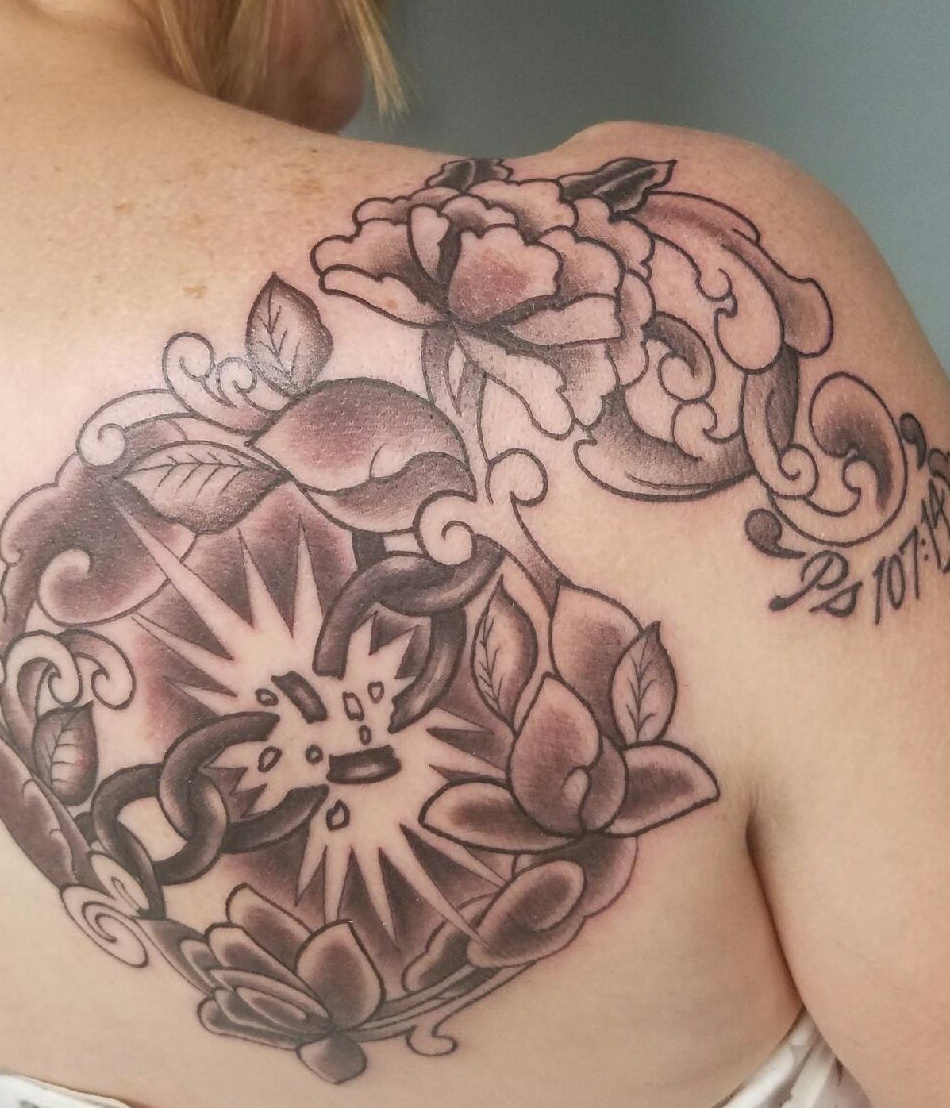
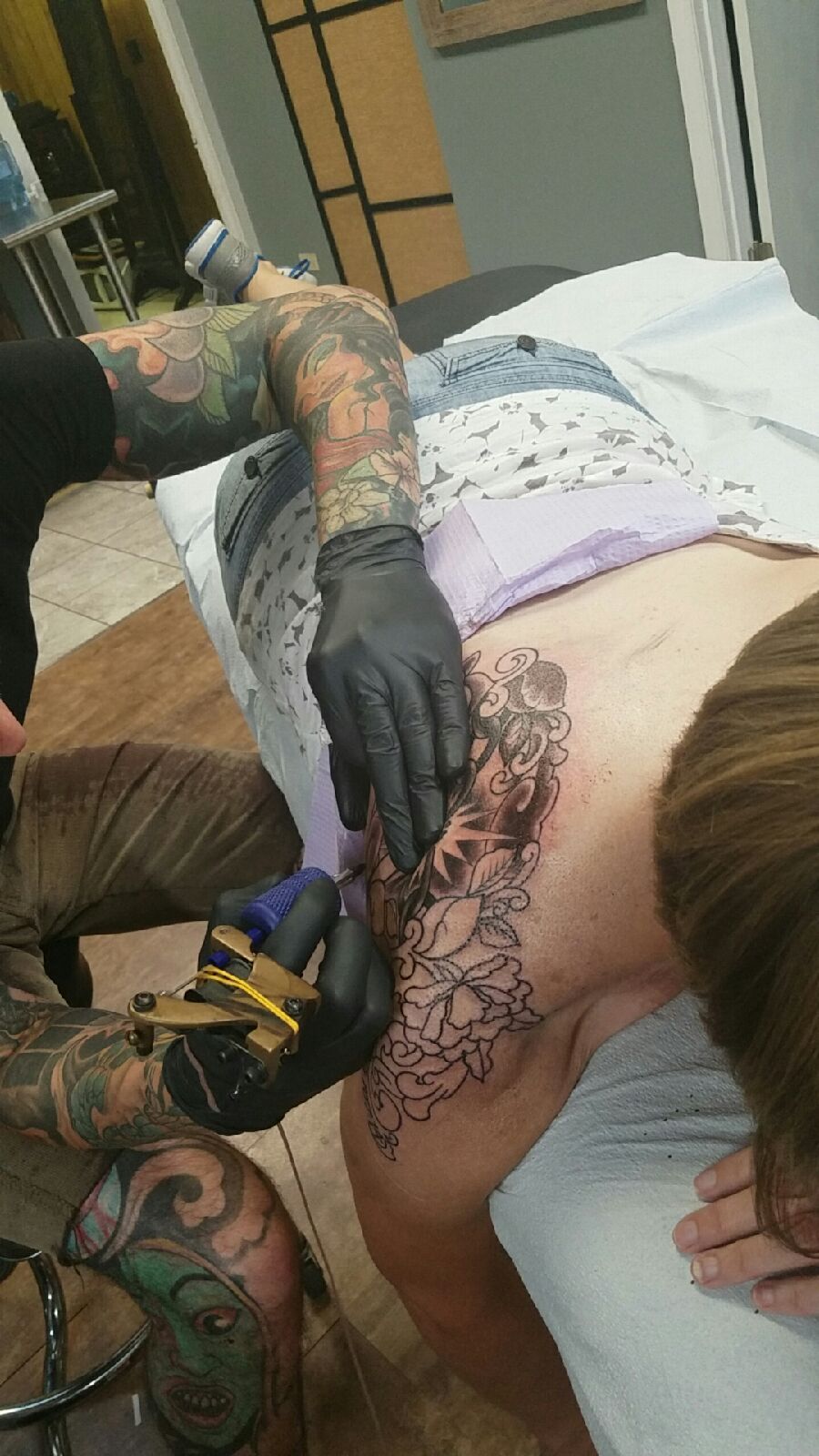
He took them out of darkness and the shadow of death, and He broke open their bonds (chains). Theillim (Psalm) 107:14
We all have a story. My message is “Do not give up”!
I would be delighted to hear your thoughts and opinions, or even listen to your story. Don’t forget to comment and subscribe.

 Through the LENS: a perspective of heart...
Leave a comment